

Open-source intelligence is only as good as the sources behind it. Some deliver polished, expert-driven analysis, while others surface raw signals in real time that demand careful scrutiny.
When OSINT is mentioned, most people first think of data. Yet the real strength of this field emerges where data is processed, interpreted, and given meaning. Blog posts, technical analysis reports, and threat intelligence portals published by leading security firms in the industry come into play here.
The content produced by organizations such as Unit42, Talos, Mandiant, SecureWorks, CrowdStrike, SentinelOne, and Kaspersky describes what happened and then places how it happened, why it happened, and how could it happen again squarely on the table. In this respect, these sources provide analyses that go far beyond raw data—analyses filtered through experience and collective intelligence.
The true value of these reports lies in making the behavior of threat actors visible. Here are a few examples:
- In the analyses Mandiant publishes on APT groups, it’s possible to read a threat actor’s technical capabilities, operational habits, timing reflexes, and even indirect cultural traces. These reports can be accessed at this site.
- Talos’s in-depth examinations of malware families allow analysts to follow, step by step, the evolution of a piece of malware from its earliest versions to its current variants. Talos research and reports are available here.
- Secureworks Cyber Threat Unit (CTU) reports go beyond technical details, revealing attackers’ economic motivations, preferred target sectors, and campaign timing. Secureworks CTU research can be found here.
This documentation reflects the threat economy and attacker psychology. However, the value of this content isn’t measured by how directly applicable it is. The real issue is using it within the correct context. Every report belongs to a specific geography, a specific customer profile, and a specific time frame. An IOC marked as critical in a Mandiant report may represent low risk for your organization. Or a TTP that makes waves on a global scale may not pose a real threat to your infrastructure at this time. Therefore, in a professional CTI approach, OSINT content is never accepted as “direct truth”; it’s always questioned, compared, and placed into context.
In the verification process, a multisource approach plays a vital role. An IP address flagged as malicious by Talos is examined through pDNS records, compared against telemetry from other threat intelligence providers, and, if necessary, correlated with the organization’s own logs and flow data. If no activity related to that IP is observed within internal systems, the risk score is naturally lowered. Similarly, a TTP set attributed to an APT group is analyzed within the MITRE ATT&CK framework, and its level of overlap with existing security controls is assessed. This process elevates OSINT from information to operational intelligence.
Another critical contribution of these blogs and reports is timeliness. In the world of attacks, everything changes rapidly. The fact that a new vulnerability has begun to be actively exploited is often first announced in a blog post or a brief analysis note. These early signals directly affect how quickly organizations can take action. Decisions such as accelerating patching processes, deploying temporary security controls, or placing certain systems under heightened monitoring are often driven by such OSINT content.
More importantly, these sources hint at both current attacks and emerging threat trends. Large campaigns rarely begin out of the blue. They are preceded by small test attacks, infrastructure setup, and probing of weak points. A Talos initial observation article may foreshadow a future threat trend even when no major attack is yet visible. A short assessment note from Mandiant may indicate an increase in an APT group’s operational tempo. Being able to read these weak signals directly strengthens an analyst’s intuitive capacity. At this point, OSINT reports cease to be merely technical sources and become analytical guides. Some approach attacks through a kill chain logic. Others map TTPs through the MITRE ATT&CK framework. Still others interpret risk concentration through statistical trends. This diversity enables analysts to approach the world with a multilayered perspective instead of a single window.
Of course, at the center of everything lies organizational context. While a vulnerability targeting ICS systems may constitute a red alert for an energy company, the same vulnerability may be secondary for an e-commerce business. A Linux-based rootkit may not pose an immediate risk for an environment that primarily operates on Windows. At this point, the role of CTI teams is to filter, weigh, and transform OSINT-derived data into organization-specific intelligence products.
These reports also serve as mirrors. They clearly reveal which mistakes attackers exploit, which vulnerabilities organizations repeatedly postpone addressing, and which controls fail to work effectively in practice. In this way, organizations also gain the opportunity to rethink their own security posture when monitoring for external threats. In other words, OSINT is both a window looking outward and a light shone inward.
Beyond all this, the quietest yet most powerful contribution of this content is the creation of a shared language among analysts. Over time, the way attack techniques are described, the approach to classifying TTPs, and the reflexes used in risk assessment become more standardized and consistent. This, in turn, increases team cohesion and elevates the quality of intelligence production.
OSINT sources aren’t content to be read and set aside. They function as a compass and an early warning system for modern security teams, helping organizations anticipate evolving threats and adapt to changing attacker tactics.
Social Media and Community-Based Sources
The concept of community in threat intelligence is no longer a romantic ornament sitting on the sidelines; it’s a player at the very center of the game, quietly changing the rules. In the modern OSINT ecosystem, social media and community-based platforms constitute both one of the fastest channels for data flow and one of the most slippery grounds for analysts. X, Telegram, Reddit, Discord, and similar channels make the pulse of threat actors, the first observations of researchers, community analyses, and global security trends visible almost in real time.
This speed provides serious advantages for corporate threat intelligence:
- Receiving early signals
- Seeing campaigns before they spread widely
- Entering the IOC-sharing cycle much faster
At the same time, however, this speed brings another reality with it that involves algorithms, echo chambers, manipulation, information pollution, and deliberate misdirection. Consequently, this environment is a double-edged sword: when managed correctly, it offers analysts extraordinary visibility; when used incorrectly, it can systematically distort the threat picture.
The X platform is, in practice today, the “main stage” of the threat intelligence ecosystem. Leading analysts, researchers, product teams, and independent security professionals share their initial findings largely on this platform. Early hints about zero-day vulnerabilities, indicators of emerging attack campaigns, fresh variants of malware families, and unusual activity by specific APT groups usually first appear in the X feed. A single, seemingly simple IOC share can reach thousands of analysts’ screens within minutes, dramatically increasing global detection and response speed.
However, there’s a critical breaking point here: Content that spreads this quickly is, by nature, not always fully verified, contextually clarified, or technically tested. Speed doesn’t—and often can’t—always align with academic accuracy and methodological rigor.
Telegram, Reddit, and Discord function more like back rooms. On Telegram, you encounter the following:
- Closed security channels
- Leak-sharing groups
- Internal conversations within researcher or threat actor communities
On Reddit, you’ll see the following:
- Technical discussions
- Proof-of-concept (POC) shares
- Analyses within cybersecurity subforums
On Discord, you’ll find long-running, relatively less visible conversations that take place within private research servers. These fragments, which may appear small or even scattered on the surface, can carry high-value signals from a threat intelligence perspective. Some Telegram groups have become spaces where ransomware groups directly discuss operational processes, announce stolen data, or publicize new communication channels. A single indicator buried in a Reddit thread may in fact be part of a much broader attack wave. A behavioral analysis shared by a niche research community on Discord may point to a critical TTP that hasn’t yet appeared in any official report.
The main factor adding complexity to this picture is the fragility of the concept of “truth” on social media. Fake analyst profiles, deliberately spread false IOCs, staged discussions organized by threat actors to muddy their own traces, propaganda content, and consciously generated noise can all be used to mislead threat intelligence analysts. Therefore, every piece of data derived from social media should first be treated as a claim in professional practice and never accepted directly as an action-triggering fact.
For example, a statement shared in a Telegram channel claiming “this IP definitely belongs to this APT group” has no analytical value on its own. The analyst must do the following:
- Examine pDNS records.
- Query associated domains.
- Review WHOIS changes.
- Check for activity related to this IP in the organization’s SIGINT, NetFlow, or log data.
Similarly, a vulnerability disclosure circulating on X shouldn’t be entered into the corporate risk register without support from official Common Vulnerabilities and Exposures (CVE) records, vendor advisories, and reverse-engineering analyses. From an academic perspective, these steps are essentially the digital adaptation of classical source criticism and multisource verification processes.
Organizations that succeed in this complex environment use social media platforms simultaneously for three core functions:
- Signal-collection space
- Early-warning mechanism
- Laboratory for observing behavioral patterns
As part of a successful organization in this area, effective CTI teams must do the following:
- Recognize trusted analysts and accounts.
- Know which profiles specialize in which domains.
- Isolate channels that provide high signal-to-noise ratios.
- Filter and consume with caution sources that carry a high risk of manipulation.
Here, the analyst evaluates both the content and the person producing it:
- What is their historical accuracy rate?
- In which topics have they consistently been wrong?
- In which situations have they chosen to remain silent?
This is, in effect, a reversed form of social engineering—the practice of analyzing the human behind the data.
Social media and community-based OSINT also open a window into the cultural fabric of the attacker ecosystem. Some threat actors communicate with each other on X, some develop tools on Discord, some announce operations on Telegram, and others discuss defense bypass techniques on Reddit. These behaviors contain meaningful clues about the threat economy, motivational structures, hierarchical organization, and internal group dynamics.
For example, a new ransomware group posting messages on Telegram along the lines of “we’re starting a new project” shortly before announcing its leak site may be one of the earliest indicators of an upcoming attack wave. Such behaviors can be interpreted in academic literature as preoperational chatter—noise signals that precede an operation.
When all of these channels are considered together, social media–based OSINT occupies a position in modern threat intelligence architectures that is both indispensable and requires extreme caution. When analyzed correctly, the following benefits are possible:
- The first stirrings of attacker behavior can be detected.
- Trends can be identified earlier.
- Critical signals can be captured in time.
- Defensive mechanisms can be updated without waiting for classical reporting cycles.
However, the uncontrolled consumption of unverified or context-free information can result in the following negative impacts:
- Distracts the analyst’s focus
- Distorts the organization’s risk prioritization
- Leads to the consumption of resources against threats that don’t actually exist
For this reason, the same source can become both a lifesaving radar and, when misconfigured, a noise machine that creates alarm fatigue. The real power of sources based on social media and the community often comes not from explicitly shared content, but from digital behavioral signals: an innocent-looking message posted by a threat actor, a screenshot unintentionally shared by a researcher, the writing style of an anonymous Telegram account, the appointment of a new moderator to a closed Discord channel, multiple Reddit accounts simultaneously converging on the same topics, and so on. Each of these may represent early indicators that emerge before any IOC is produced, any CVE record is published, or any official report is written.
The point where a professional analyst makes the difference is by focusing not on where the crowd is looking, but on the fracture created by a small anomaly that no one cares about. Let’s consider a few practical examples using various platforms:
Telegram
Some closed Telegram groups provide good examples of this phenomenon. These groups are often not spaces for long technical discussions; short, fragmented, and relatively superficial messages circulate. Yet the signal is hidden within this simplicity. The following seemingly insignificant dynamics can be early indicators of new attack preparations or the development of new tools/payloads for an experienced OSINT analyst:
- A sudden change in the group administrator’s profile picture
- A sudden shift in the time zones during which participants are active
- The group going completely silent for a few days and then rapidly becoming active again
Similar background stories can be observed on Reddit as well. Technical questions that appear innocent on the surface may actually be indirect signals of an upcoming attack, for example, one user repeatedly asking over several days why “a specific hex sequence causes crashes in shellcode,” followed by another account claiming that “a new packer automatically inserts this hex sequence,” and so on. When writing styles, active time windows, and previously asked questions are considered together, a strong intuitive profile may form suggesting that both accounts are operated by the same threat actor.
For an ordinary user, this is merely a technical discussion; for a CTI analyst, it’s the first draft of malware that hasn’t yet been deployed.
X
Directly tracking threat actors themselves on X may not always be possible; however, following the surrounding ecosystem often yields more productive results. A sudden concentration of certain analyst accounts on the same theme, increased technical discussions just before a vulnerability disclosure, synchronized silence among accounts that track threat groups, bot accounts repeatedly amplifying similar content can all be interpreted as behavioral indicators of an approaching attack wave.
Discord
Recognizing such signals requires more than classical IOC collection practices; it demands a form of social media literacy and behavioral analytics. On Discord servers, threat actors rarely take the stage themselves; instead, the ecosystem’s “proxy” players reveal themselves through their behavior. For example, the following often indicates that an organized group is training new members:
- A sudden influx of new accounts join training channels.
- These accounts consecutively raise topics such as “PowerShell obfuscation,” “LOLBins,” or “Cobalt Strike alternatives.”
Such behavioral patterns are frequently associated with campaigns that emerge in the field a few weeks later. What appears to be random chatter from the outside is, in reality, operational preparation hidden within noise.
On top of all this comes the fake news and manipulation dimension, which is perhaps the riskiest aspect of social media. Threat actors sometimes generate deliberate fake leaks to overshadow their own operations, write fabricated messages accusing rival groups, or initiate artificial debates to distract the security community.
Yet even this fake content has analytical value for a professional analyst: the target, language, and method of manipulation carry critical clues about the threat actor’s real operational intent. For instance, falsely accusing a specific APT group with incorrect IOCs on X often suggests a diversion from the real attack planned in another geography or sector. Claims circulating on Telegram that “this CVE is being actively exploited” may signal that an undisclosed vulnerability is being tested in the background.
Conclusion
In conclusion, producing threat intelligence from social media isn’t just about collecting what’s visible. It’s about reading the invisible, understanding the intent behind behaviors, placing small anomalies into the larger picture, and generating coherent, strategic insights amid information chaos. This process requires the following:
- Human intuition beyond classical OSINT tools
- Patience and continuity
- A behavioral analysis reflex
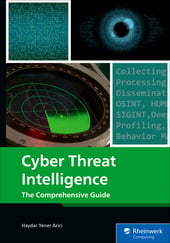
Editor’s note: This post has been adapted from a section of the book Cyber Threat Intelligence: The Comprehensive Guide by Haydar Yener Arici. Haydar is a senior systems and cybersecurity specialist with more than 23 years of experience in IT infrastructure, system administration, digital forensics, and open-source intelligence (OSINT). Throughout his career, he has conducted extensive work in critical areas such as the design, operation, and security of enterprise IT infrastructures; digital evidence analysis; and the establishment and development of corporate cybersecurity processes.
This post was originally published 8/2026.


Comments