---
title: "A Practical Introduction to Deep Learning: Concepts, Methods, and Applications"
description: Explore an in-depth introduction to deep learning, covering core concepts, learning methods, and real-world applications for deploying effective AI models.
image: https://blog.rheinwerk-computing.com/hubfs/A%20Practical%20Introduction%20to%20Deep%20Learning_%20Concepts%2c%20Methods%2c%20and%20Applications.jpg
---
[](https://blog.rheinwerk-computing.com/) [Blog](https://blog.rheinwerk-computing.com)
- Books
- Get an overview of our wide selection of books on every relevant computing topic.
- [General Computing](https://www.sap-press.com/rheinwerk-computing/general-computing/)
- [DevOps](https://www.sap-press.com/rheinwerk-computing/devops/)
- [Programming Languages](https://www.sap-press.com/rheinwerk-computing/programming-languages/)
- [Security](https://www.sap-press.com/rheinwerk-computing/security/)
- [Software Development](https://www.sap-press.com/rheinwerk-computing/software-development/)
- Book Subscription
- Get unlimited access to all Rheinwerk Computing books!
- [Programming Subscription](https://sap-press.com/subscriptions/)
[Featured](https://blog.rheinwerk-computing.com/tag/featured)
# A Practical Introduction to Deep Learning: Concepts, Methods, and Applications
 by [Rheinwerk Computing](https://blog.rheinwerk-computing.com/author/rheinwerk-computing)
Deep learning is closely related to other terms, and that often leads to confusion.
Therefore, this figure will help you differentiate the terms.
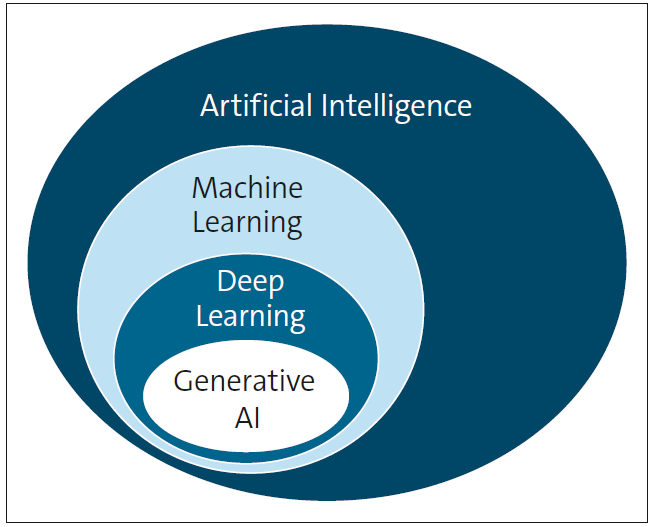
The overarching term is *artificial intelligence* (AI), the best-known representative of which is machine learning. You may have already developed regression or classification models using statistical methods, which can also be classified as machine learning. You can use machine learning to develop algorithms that can learn from data and solve certain tasks without having been explicitly programmed to do so.
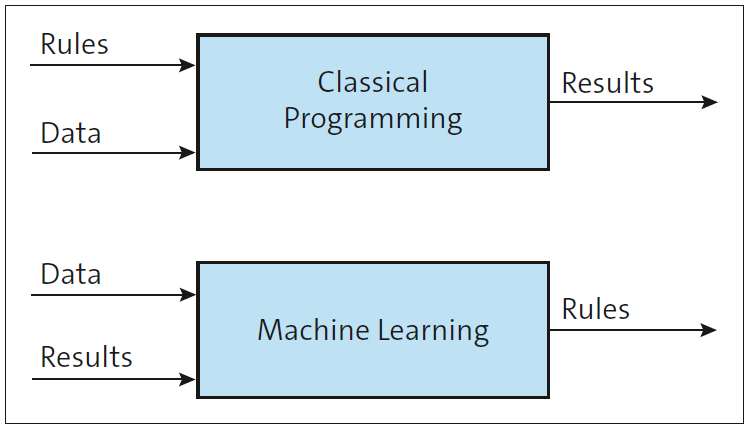
The next figure illustrates the difference between classic programming and machine learning. Whereas in traditional programming, a technical expert had to manually define rules that describe how the data is to be processed, in *machine learning*, the data (including the results) are passed to the algorithm and the algorithm can extract the rules independently, based on this information.
Since the 2010s, however, deep learning has taken over the field. Deep learning belongs to the field of machine learning but works quite differently from traditional statistical methods in terms of technology. Deep learning uses artificial neural networks that attempt to replicate the human brain as computer-supported functions.
Then, in the 2020s, due to the success of large language models, other generative AI systems were added that can do things like taking text input and generating images or videos from them. This subarea is called *[generative AI](https://blog.rheinwerk-computing.com/what-is-generative-ai)* because it deals with models that can generate (i.e., create) new things independently.
## What Can You Use Deep Learning For?
Training data can be available in different forms, and that leads one to use different methods to train models. These methods and how they work are as follows:
### Supervised Learning
You train the model with labeled data. This means that each dataset contains a correct answer, which is called a *label* or *target variable*. The model learns by recognizing the relationship between the input data and the corresponding labels, and the goal is to find a function that correctly maps the input data to the output data. You can think of a neural network as a complex function.
### Unsupervised Learning
You train the model with data that isn’t labeled. The model doesn’t receive predefined answers. Instead, the goal is to find hidden patterns and structures in the data. Such models are often used to group similar data points (in a process known as *clustering*) or reduce dimensionality, as in dimension reduction or autoencoders.
### Reinforcement Learning
This is a type of learning in which an agent learns through interaction with its environment. The agent makes autonomous decisions or performs actions for which it receives rewards or punishments, and its goal is to develop a strategy that maximizes its cumulative reward. You’ll use reinforcement learning for tasks in which the model must make a series of decisions, such as in robotics, autonomous driving, and playing video games.
### Semi-Supervised Learning
This is an approach that combines the advantages of supervised and unsupervised learning. You’ll use it when only a small amount of labeled data is available but a large amount of unlabeled data is available. You’ll use special algorithms to create pseudolabels and train a model with a combination of the originally labeled and pseudolabeled data. This approach can be helpful when labeling data is very time-consuming and expensive, such as in image recognition or speech recognition.
This figure shows the tasks for which you can use deep learning. The learning method is shown horizontally, and the two types of target variable are plotted vertically.
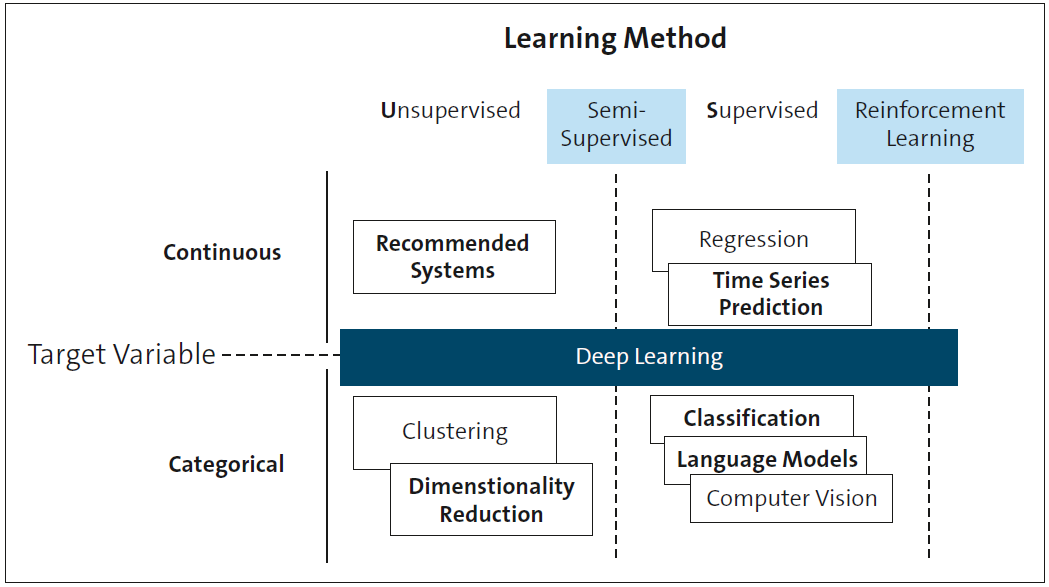
The target variable can be continuous or categorical, and the various task fields of deep learning result from this combination. The book follows this structure, so that many chapters correspond exactly to these task areas.
We explain the individual areas of responsibility in more detail in the following list:
### Regression
This is a supervised learning task in which the model predicts a continuous numerical value and learns the relationship between the input data and the continuous target value. Examples of regression include the prediction of house prices, share prices, and physical parameters such as temperatures.
### Time Series Prediction
This is a special type of regression that is also part of supervised learning. The model predicts future values based on historical, time-ordered data, and the target variable is continuous. Areas of application include the prediction of electricity consumption, sales figures, and weather trends.
### Classification
This is a supervised learning task in which the model categorizes input data into one of several predefined classes. Using labeled data, the model learns to identify the characteristics that distinguish one class from another. Classic examples are the recognition of e-mails as “spam” or “not spam” and the classification of patients into “healthy” and “sick” categories.
### Language Models
Natural language processing models are part of supervised classification, specifically self-supervised learning. In this approach, the models generate their own “labels” from the unlabeled input data. The models learn the probability that a certain word sequence will occur and uses that to generate or understand text. They can categorize sentences or text excerpts, as is the case with sentiment analysis, for example. They can therefore assign text such as “I like the product” to the “positive” class.
### Models for Computer Vision
*Computer vision* is a broad field that mostly belongs to supervised learning and deals with the automatic processing and understanding of images and videos. The tasks include *image classification* (classification of the entire image into a specific class), *object recognition* (e.g., categorization of objects in an image), and image segmentation. The target variable here is categorical.
### Clustering
This is a task of unsupervised learning, and its aim is to classify similar data points into groups (clusters) without predefined labels. The target variable is categorical, as each data point is assigned to a category (the cluster). One application example is the segmentation of customers into different target groups.
### Dimensionality Reduction
This is a task of unsupervised learning in which the number of features (dimensions) in a dataset is reduced to facilitate data visualization and improve the computational efficiency of models without losing important information. The target variable is categorical here, as it represents the affiliation of the data points to a reduced space.
### Recommender Systems
This can be considered a nonsupervised, semisupervised, or even supervised learning field. These systems analyze user behavior to find patterns and recommend products, content, or services to the user. The target variable can be continuous if, for example, the rating (e.g., 1 to 5 stars) is predicted, but often, there is no target variable and the model analyzes which products are similar or have been purchased by similar users.
This list provides a good overview of the types of problems you can tackle with deep learning. Now, let’s turn to the question of how deep learning works.
## How Does Deep Learning Work?
Deep learning is based on training a model in a first step, and the trained model is then deployed and used. This step is called *model inference*. The most complicated part is model training, which we’ll look at now.
### Model Training
The diagram in the following figure illustrates the training process for a neural network. It starts with the training data, which contains descriptive features (often called *independent features*) that are abbreviated here as a capital X (as is usual in statistics), as well as the actual target values (often called *dependent features*) that are usually abbreviated as Y.
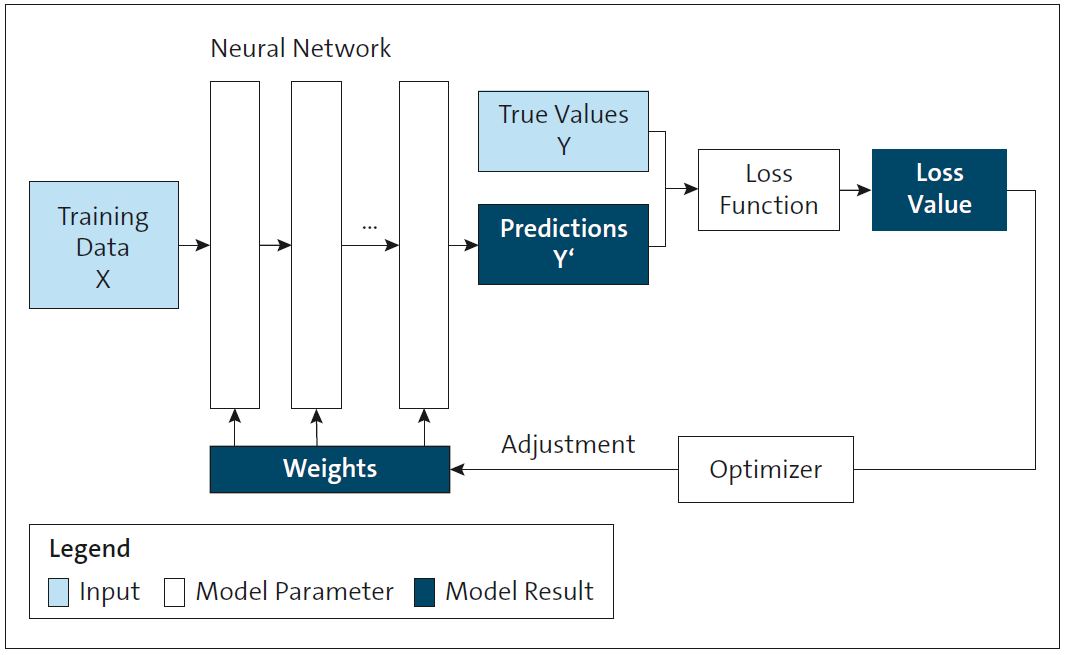
An example of such training data would be a dataset created from past transactions on the real estate market. The target value in this case would be the sales price of the house, and the descriptive features would be things like the age of the house, the living space, the condition, etc.
The independent features are fed into the neural network, which consists of several layers. In each layer, there is a clearly defined number of neurons with specific weights that represent the strength of the connections between the neurons. The independent features are processed in the network, and the predictions (Y') are delivered.
These predictions are compared with the actual values (Y), and this comparison is made using a loss function. The loss function measures the deviation between the predictions and the actual values, resulting in a loss value. An optimizer uses this loss value to determine how the weights must be adjusted to minimize the error.
This process is repeated in loops, in which the training data is “shown” again to the now “smarter” model, in which the weights are continuously updated. The aim is for the model to make better and more accurate predictions, and as soon as it does, the training can be stopped. The trained model is checked using *test data* (i.e., data that the model hasn’t seen before) to ensure that it delivers good results with more than just the training data. It can then prove itself in practice by making predictions for “new” data.
### Model Inference
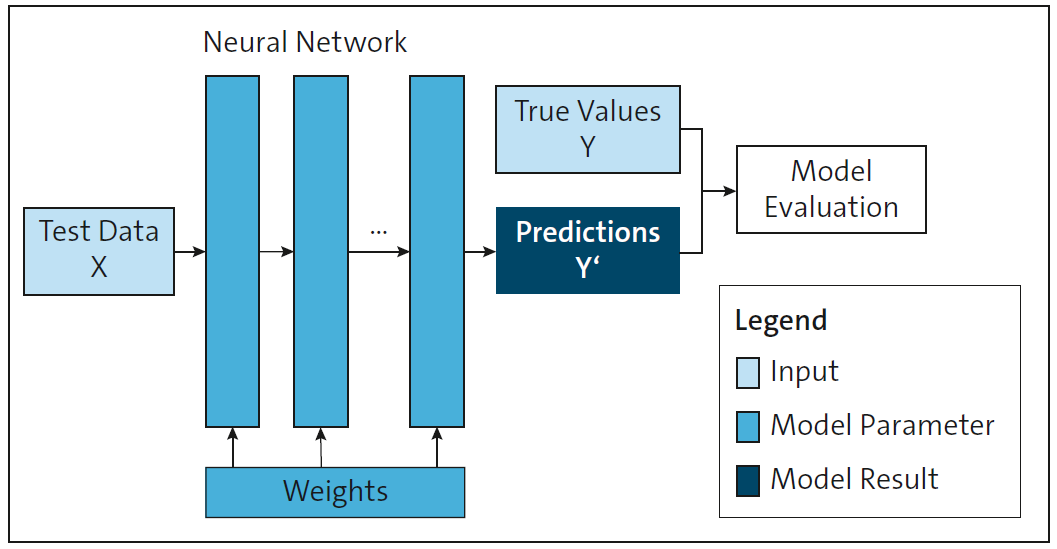
The figure below shows how the previously trained model is applied to make predictions for unknown data. This model inference process uses the model architecture with *frozen* weights, meaning that the model weights are no longer adjusted in this step—nor should they be. The test data, which has never been seen by the model, is used to make predictions. These predictions are used with the actual, real values in the model evaluation to check the quality of the model.
## Conclusion
Deep learning has fundamentally changed what's possible with artificial intelligence. From predicting house prices to recognizing objects in images to generating entirely new content, the range of problems it can solve continues to expand.
At its core, deep learning follows a straightforward loop: feed data into a neural network, measure how wrong its predictions are, adjust the weights, and repeat until the model gets good enough to be useful in the real world. Whether you're working with labeled data in a supervised setting, uncovering hidden patterns without labels, or training an agent to make sequential decisions, the underlying mechanics remain largely the same.
Understanding these foundations (the learning paradigms, the task types, and the training and inference pipeline) gives you the conceptual vocabulary to explore any area of deep learning with confidence.
Editor’s note: This post has been adapted from a section of the book *[PyTorch: The Practical Guide](https://www.amazon.com/PyTorch-Practical-Deploying-Rheinwerk-Computing/dp/1493227866?maas=maas_adg_D720329C124BF25CB5CF26CE1BB6EA78_afap_abs&ref_=aa_maas&tag=maas)* by [Bert Gollnick](https://www.linkedin.com/in/bertgollnick/). Bert is a senior data scientist who specializes in renewable energies. For many years, he has taught courses about data science and machine learning, and more recently, about generative AI and natural language processing. Bert studied aeronautics at the Technical University of Berlin and economics at the University of Hagen. His main areas of interest are machine learning and data science.
This post was originally published 4/2026.
## Recommendation
[](https://www.amazon.com/PyTorch-Practical-Deploying-Rheinwerk-Computing/dp/1493227866?maas=maas_adg_D720329C124BF25CB5CF26CE1BB6EA78_afap_abs&ref_=aa_maas&tag=maas)
**Train and implement deep learning models with PyTorch!**
Whether you're just getting started with deep learning or looking to sharpen your PyTorch skills, this hands-on guide covers everything you need — from linear regression and classification to computer vision, language models, and beyond. With practical exercises, real example code, and deployment tools like MLflow and FastAPI, it's the only PyTorch resource you'll need.
[Learn More](https://www.amazon.com/PyTorch-Practical-Deploying-Rheinwerk-Computing/dp/1493227866?maas=maas_adg_D720329C124BF25CB5CF26CE1BB6EA78_afap_abs&ref_=aa_maas&tag=maas)

**by [Rheinwerk Computing](https://blog.rheinwerk-computing.com/author/rheinwerk-computing)**
Rheinwerk Computing is an imprint of Rheinwerk Publishing and publishes books by leading experts in the fields of programming, administration, security, analytics, and more.
[Featured](https://blog.rheinwerk-computing.com/tag/featured) [Artificial Intelligence](https://blog.rheinwerk-computing.com/tag/artificial-intelligence)
[](https://www.facebook.com/share.php?u=https%3A%2F%2Fblog.rheinwerk-computing.com%2Fa-practical-introduction-to-deep-learning-concepts-methods-and-applications%3Futm_medium%3Dsocial%26utm_source%3Dfacebook) [](https://www.linkedin.com/shareArticle?mini=true&url=https%3A%2F%2Fblog.rheinwerk-computing.com%2Fa-practical-introduction-to-deep-learning-concepts-methods-and-applications%3Futm_medium%3Dsocial%26utm_source%3Dlinkedin) [](https://twitter.com/intent/tweet?original_referer=https%3A%2F%2Fblog.rheinwerk-computing.com%2Fa-practical-introduction-to-deep-learning-concepts-methods-and-applications%3Futm_medium%3Dsocial%26utm_source%3Dtwitter&url=https%3A%2F%2Fblog.rheinwerk-computing.com%2Fa-practical-introduction-to-deep-learning-concepts-methods-and-applications%3Futm_medium%3Dsocial%26utm_source%3Dtwitter&source=tweetbutton&text=) [](mailto:?subject=Check+out+https%3A%2F%2Fblog.rheinwerk-computing.com%2Fa-practical-introduction-to-deep-learning-concepts-methods-and-applications%3Futm_medium%3Dsocial%26utm_source%3Demail&body=Check+out+https%3A%2F%2Fblog.rheinwerk-computing.com%2Fa-practical-introduction-to-deep-learning-concepts-methods-and-applications%3Futm_medium%3Dsocial%26utm_source%3Demail)
### Comments
### Latest Blog Posts
[](https://blog.rheinwerk-computing.com/how-to-choose-a-machine-learning-model-for-your-project)
[Featured](https://blog.rheinwerk-computing.com/tag/featured)
## [How to Choose a Machine Learning Model for Your Project](https://blog.rheinwerk-computing.com/how-to-choose-a-machine-learning-model-for-your-project)
[Read More](https://blog.rheinwerk-computing.com/how-to-choose-a-machine-learning-model-for-your-project)
[](https://blog.rheinwerk-computing.com/how-do-you-measure-an-error-in-a-multilayer-network)
[Artificial Intelligence](https://blog.rheinwerk-computing.com/tag/artificial-intelligence)
## [How Do You Measure an Error in a Multilayer Network?](https://blog.rheinwerk-computing.com/how-do-you-measure-an-error-in-a-multilayer-network)
[Read More](https://blog.rheinwerk-computing.com/how-do-you-measure-an-error-in-a-multilayer-network)
**Subscribe to our blog!**Get notified about future blog updates.
-
-
-
### The official Rheinwerk Computing Blog
Rheinwerk Computing is an imprint of Rheinwerk Publishing and publishes resources that will help you accelerate your computing journey. The Rheinwerk Computing Blog is designed to provide helpful, actionable information on a variety of topics, including programming, administration, security, and analytics!
### Blog Topics
- [All Topics](https://blog.rheinwerk-computing.com)
- [Programming Languages](https://blog.rheinwerk-computing.com/tag/programming-languages)
- [How To](https://blog.rheinwerk-computing.com/tag/how-to)
- [JavaScript](https://blog.rheinwerk-computing.com/tag/javascript)
- [DevOps](https://blog.rheinwerk-computing.com/tag/devops)
- [Web Development](https://blog.rheinwerk-computing.com/tag/web-development)
- [Python](https://blog.rheinwerk-computing.com/tag/python)
- [What Is?](https://blog.rheinwerk-computing.com/tag/what-is)
- [Cybersecurity](https://blog.rheinwerk-computing.com/tag/cybersecurity)
- [Software Development](https://blog.rheinwerk-computing.com/tag/software-development)
- [Java](https://blog.rheinwerk-computing.com/tag/java)
### Blog curated by
[](https://www.sap-press.com/rheinwerk-computing/) [Visit Rheinwerk Computing Store](https://www.sap-press.com/rheinwerk-computing/)
### About
- [Home](https://sap-press.com/)
- [About Us](https://sap-press.com/the-publisher/)
- [Contact](mailto:info@rheinwerk-publishing.com)
- [Legal Notes](https://sap-press.com/legal-notes/)
- [Privacy Policy](https://sap-press.com/privacy/)
- [Terms of Use](https://sap-press.com/terms/)
© 2026 Rheinwerk Publishing, Inc. | Change Privacy Options
```json
{
"@context" : "https://schema.org",
"@type" : "BlogPosting",
"author" : {
"@type" : "Person",
"name" : "Rheinwerk Computing",
"url" : "https://blog.rheinwerk-computing.com/author/rheinwerk-computing"
},
"dateModified" : "2026-04-01T15:53:03.031Z",
"datePublished" : "2026-04-01T13:00:05.000Z",
"headline" : "A Practical Introduction to Deep Learning: Concepts, Methods, and Applications",
"image" : [ "https://blog.rheinwerk-computing.com/hubfs/A%20Practical%20Introduction%20to%20Deep%20Learning_%20Concepts%2c%20Methods%2c%20and%20Applications.jpg" ],
"mainEntityOfPage" : {
"@id" : "https://blog.rheinwerk-computing.com/a-practical-introduction-to-deep-learning-concepts-methods-and-applications",
"@type" : "WebPage"
},
"publisher" : {
"@type" : "Organization",
"logo" : {
"@type" : "ImageObject",
"url" : "https://blog.rheinwerk-computing.com/hubfs/Logo-1.jpg"
},
"name" : "Rheinwerk Publishing, Inc."
}
}
```